A water outage plan for a home on a private supply
Rules from official regulators only How we source the rules How we label ads
On this page
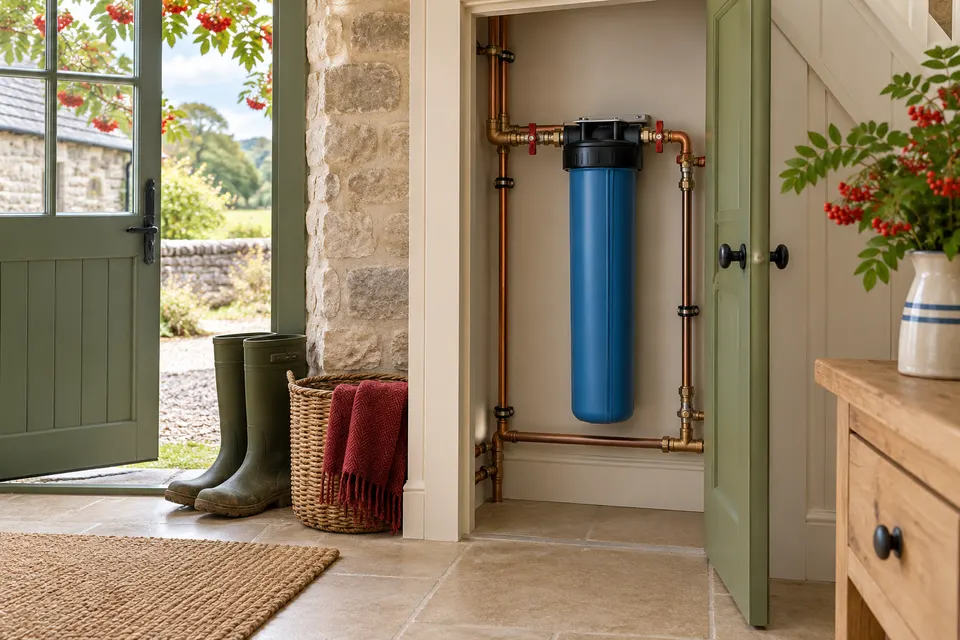
A home on a private supply needs to know whom to contact when the flow stops or the water changes. Write that plan while everything is working, particularly where a pump, treatment unit or shared arrangement is involved.
Regulatory scope: Drinking Water Inspectorate (DWI) guidance for England and Wales and UK Government emergency advice, checked on 24 October 2026. Use the relevant authority's arrangements in Scotland and Northern Ireland.
Identify who can help
Keep contact details for the system maintainer, your local authority and any other households sharing the supply. The DWI's buyer guidance suggests a supply should have documented instructions for problems with sufficiency or water quality, with telephone numbers or other contact details for alternative supplies, pipe repairs and treatment maintenance, plus a diagram of the pipes, tanks and inspection chambers. Write yours before you need it, and check it against the DWI guidance.
Ask the maintainer which observations you can safely report and which jobs need a professional. Do not enter tanks or chambers, open electrical equipment or restart a suspect installation without instructions.
Separate no water from doubtful water
Running out of water and a change in water quality call for different advice. The DWI says that if a supply becomes, or is likely to become, insufficient or unwholesome, the local authority can serve a notice on the person responsible, so it is worth knowing early who your local authority contact is and what they would want to know. Note where you will get guidance on whether the water can be used, and for what purposes.
If you are not sure your water is suitable, contact your council's environmental health team and get it tested, and seek medical advice if anyone is unwell. For urgent help use NHS 111 in England, Scotland or Wales; in Northern Ireland contact your GP or GP out-of-hours service. Call 999 for a life-threatening emergency.
Do not assume boiling resolves every possible problem. Follow the specific advice given for the incident.
Keep ordinary emergency supplies
The UK Government's Be Ready for emergencies checklist includes bottled water for three days, at 3 litres per person per day for drinking, noting that more would be needed for cooking and washing. It also asks you to consider what your household relies on, such as baby formula, medical items and pet food, and says ready-to-feed formula can be best because you may not be able to boil water safely to make up powder. It also points to the Priority Service Register, which lets electricity, gas and water providers know that a household needs extra support when a supply is interrupted. That register is run through your providers, so ask your local authority what support applies to a private supply.
If the supply depends on a pump or treatment unit, ask the maintainer how a power cut affects it and what a safe recovery looks like. Where that treatment is a UV unit, use what to ask before a fault for the alarms and the lamp. Do not size a backup generator from a guessed pump load.
Put the first call on one sheet
Write the supply identity, property name, maintainer and council contacts on an accessible paper sheet as well as in the digital file. Include the shared-supply coordinator, any deputy and out-of-hours routes confirmed with the relevant organisations. Do not assume one number covers every issue or offers immediate attendance.
Ask the maintainer beforehand what you can safely observe and report. Leave space for when the issue was first noticed, points or properties affected and the advice received. “No flow at this tap this morning” is an observation; “pump failed” is a diagnosis you may not have.
Record who gave advice, when and the next step. An unanswered call needs another route, agreed with the appropriate service, rather than a universal waiting period invented in the plan. Someone else should be able to pick up the sheet and continue accurately.
Consider who needs extra help
Adapt the Government checklist to the household, including help obtaining alternative water or reading instructions. Ask the council or relevant provider what support applies and where additional supplies could come from if the usual arrangement fails. Public water company arrangements do not automatically apply to a private supply.
Follow supplier instructions and current official advice for stored supplies. This plan gives no treatment, rationing or storage procedure for improvised containers.
For visitors and temporary occupiers, provide current, dated instructions and a contact. Do not expect them to interpret service history or rely on a welcome note written before the concern arose.
Agree how power problems will be handled
Keep model-specific advice for powered pumps or treatment with the plan. Ask how a problem is signalled, what users should do while seeking help and who confirms recovery. Restored electricity or a lit indicator cannot answer a water-quality question on its own.
If considering backup power, have qualified professionals assess the complete installation and intended use. A product listing or motor rating is not an electrical design. Save the resulting instructions with the equipment records, and archive procedures for equipment that has been replaced.
Share the authority's advice accurately
For a shared supply, agree who contacts the council or specialist, passes on instructions and checks that affected users receive them. The coordinator should not make treatment or water-use decisions from neighbours' experiences.
Record which supply, properties and uses an instruction concerns, keeping the original communication available. Ask who can confirm restrictions ending and retain that confirmation separately from repair completion or return of flow.
Choose an alternative to the usual group message if phones or internet are unavailable. In a hypothetical outage without internet, the paper sheet still provides contacts and somewhere to record advice. Use the agreed alternative contact method and ask the authority or responsible coordinator how to handle anyone unreachable.
Update the plan from what happened
After an incident, save the factual sequence, findings, repairs and follow-up sample results. Note missing information and contacts that failed; there is no benefit in rewriting the response to make it look tidier.
Review after a sale, changed maintainer, altered sharing arrangement or equipment change. Ask whether previous instructions still apply. Keep current advice at the front and old procedures in the archive, so the next interruption starts with the right information.
FAQs
How much emergency drinking water should I keep?
The UK Government's Be Ready checklist suggests bottled water for three days at 3 litres per person per day for drinking, and says more is needed for cooking and washing.
Who do I contact if my private supply seems wrong?
Contact your council's environmental health team and your maintainer. If anyone is unwell, seek medical advice through the route for your UK nation described in this page’s health callout. Call 999 for a life-threatening emergency.
Sources
Checked on 24 October 2026.
- Drinking Water Inspectorate: buying a home with a private supply
- UK Government: Be Ready for emergencies
Health-service routes: NHS urgent help and Northern Ireland GP out-of-hours.