Owning a borehole water supply: know the route from source to tap
Rules from official regulators only How we source the rules How we label ads
On this page
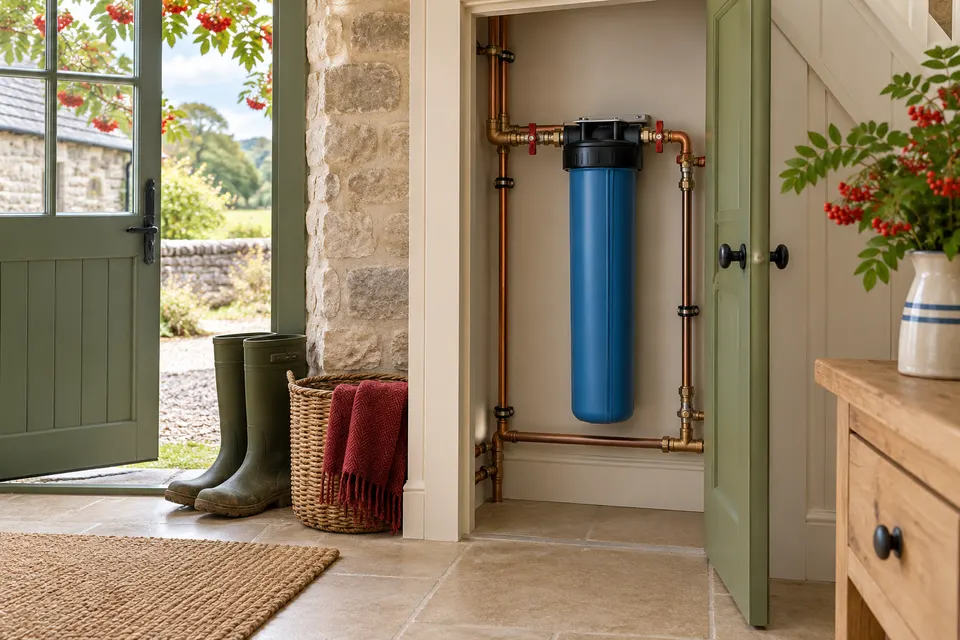
A borehole is only the source
Water may pass from the borehole through a submersible pump, storage, pressure equipment, filters, chemical correction and UV treatment before reaching a tap. A sample result at one point and time does not describe every part or future condition of that route. Map the whole supply and keep the local authority's advice with the equipment records.
Build a source-to-tap record
- borehole position, depth and construction record;
- driller and completion date;
- land ownership and access rights;
- pump model, depth, controls and electrical protection;
- pressure vessel and storage details;
- treatment sequence, models and settings;
- pipe route, isolation valves and shared branches;
- sample points and laboratory reports;
- council risk assessments or correspondence; and
- servicing, filter, lamp and repair history.
The Drinking Water Inspectorate says poor borehole headworks or casing can allow contamination into a supply. Its guidance treats source protection, treatment and distribution as connected barriers.
Check the headworks from outside
Look for changes around the source: damaged covers, surface water pooling, animal access, nearby digging, fuel or chemical storage and new drainage activity. Do not open equipment or disinfect the supply without a competent plan. Photograph safe external observations and send them to the person responsible for the system.
Yield and quality answer different questions
A borehole can produce enough water yet still need treatment, or produce good sample results during a period that does not represent drought or heavy rain. Keep pumping or yield-test records separate from water-quality reports. Ask what conditions each test represents and whether a change in use needs further assessment.
Abstraction and national rules
Licensing thresholds and private-water regulations differ across the UK. In England, GOV.UK says abstraction above the stated daily threshold is likely to need a licence and investigation work may need prior consent. Do not transfer that threshold to Wales, Scotland or Northern Ireland: use the link for the relevant regulator and ask before drilling or increasing use.
Local authorities have roles in private water supplies. Contact the council before a new commercial, rented, shared or public use, and when buying a property if the regulatory history is unclear.
Plan for loss of supply
Record how to recognise pump, pressure, power and treatment alarms; who can isolate equipment; and where suitable alternative water will come from. A spare UV lamp does not solve a pump or electrical failure. Use the water outage plan to assign calls and decisions.