Septic tank sizing starts with use, not a product listing
Rules from official regulators only How we source the rules How we label ads
On this page
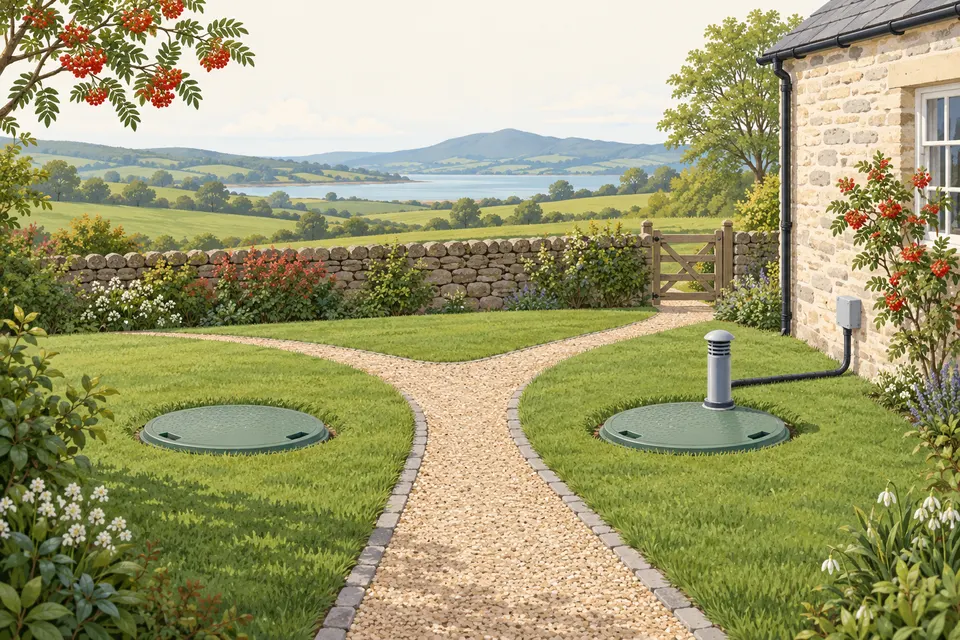
Do not size from current headcount alone
A designer needs the intended capacity of the property and every connected use, not only the people at home today. Bedrooms, annexes, holiday guests, home businesses, events and planned extensions can change the design basis. The tank and drainage field form a system, so a larger vessel does not make an undersized or unsuitable field acceptable.
Give the designer a written use schedule
List:
- each connected dwelling or building;
- bedrooms and realistic maximum occupancy;
- baths, showers and high-volume fixtures;
- washing, catering or business use outside an ordinary household;
- intermittent peaks such as holiday letting;
- planned building work; and
- any flows that should not enter foul drainage, including roof water.
Ask the designer to state the population or loading used, the guidance and standard applied, the selected tank's effective capacity and how the drainage field was calculated.
Capacity is not the only product question
Check inlet and outlet levels, access for desludging, structural installation requirements, ventilation, covers, groundwater conditions and compatibility with the proposed drainage field. A catalogue capacity cannot answer whether the unit can be installed safely at the required depth.
If a pump is proposed, ask why gravity is unavailable, what storage exists during a failure and how the alarm works. If multiple properties connect, clarify ownership, access, bills and maintenance in writing.
Existing tanks and extensions
Adding a bedroom or annexe does not simply add a number to the old label. Establish the existing tank, outlet and field, then ask a competent designer whether the complete system can support the proposed use. Building control, planning and environmental requirements may all need consideration.
Beware of “number of people” adverts
Product labels can be useful inputs, but they are not a site design or approval. Ask why the chosen model fits the design load and what happens if the use changes. Keep the calculation, product data, as-built drawing and commissioning record for the next owner.